
On 12 October 2026, an appeal panel in Cape Town heard a challenge to the land use rights for Equinix’s hyperscale data centres at King Air Industria. The appeal was brought by the Housing Assembly and Foxglove. Cape Town’s mayor now has 90 days from that hearing to uphold or dismiss it, and the city’s by-laws give him until January. The city’s Municipal Planning Tribunal had approved the application by four votes to one. The one vote against came from its lead urban planner, which is worth noting.
Most coverage has focused on electricity and water. An op-ed in Daily Maverick by Foxglove’s South Africa lead, which presents one side of the dispute, notes that the facility is approved at 174MVA. The author compares this to the annual electricity use of about a quarter of a million average Cape Town households. A less discussed question is what happens on site when that load cannot come from the grid, which is beyond uncommon in the Mother City, and whether a city should know the answer before it approves the site.
Backup power is a waste and emissions source
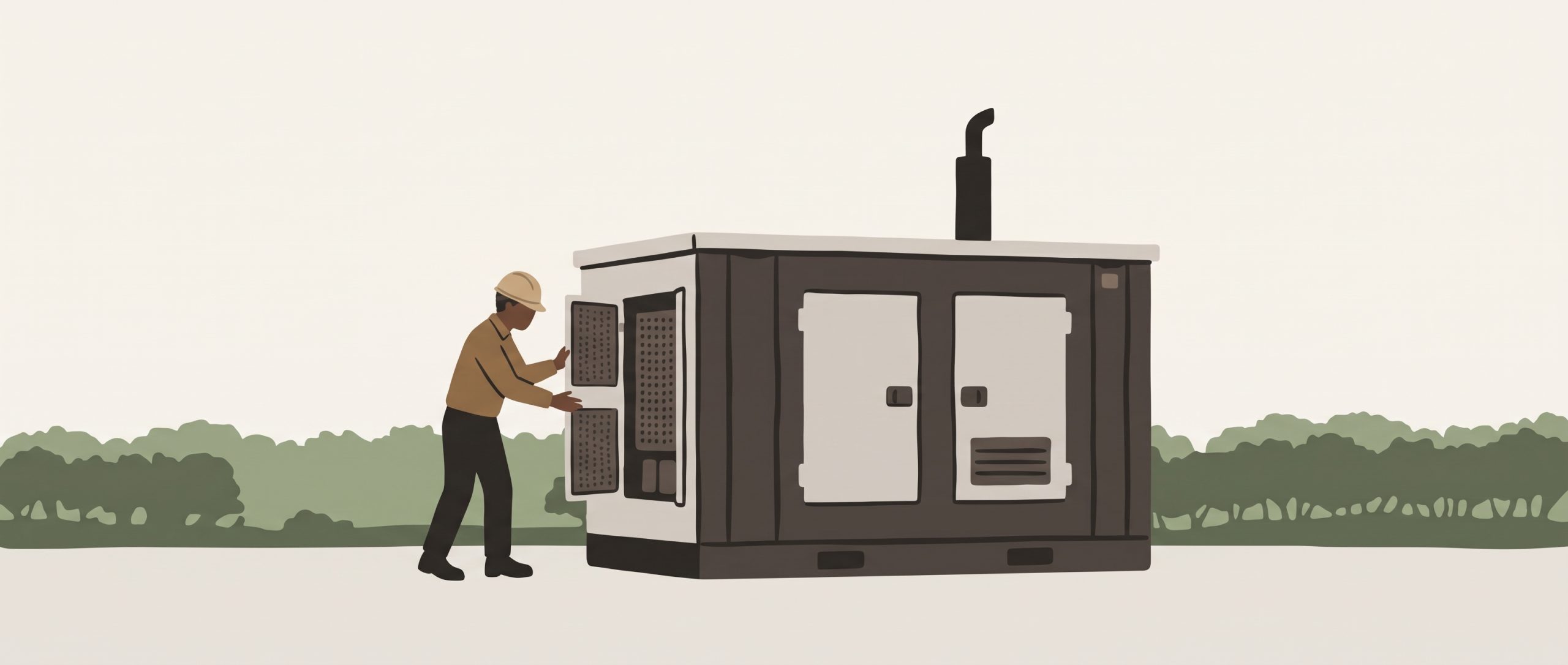
Large data centres are built to keep running through grid failures. In practice this usually means banks of diesel generators, bulk fuel storage, and large battery systems for uninterrupted power. Each of these creates a waste and emissions profile that a planning decision should take into account.
Generators produce exhaust emissions and noise every time they are tested or run, louder than the normal loud hum the centre drums out. They also produce used oil, filters, coolant and fuel-contaminated water. Fuel tanks bring a risk of soil and groundwater contamination. Battery systems reach the end of their life and become hazardous waste. In a country where grid supply has been unreliable, backup systems may run more often than the original design assumed.
None of this is unusual or hard to manage. It does need to be planned, permitted and paid for. That is difficult if the municipality has never been told the scale.
Disclosure belongs before approval, not after
According to the op-ed, the City reports five data centres approved in Cape Town and two more under assessment, but has not disclosed their operators or power draw. The author argues that approvals have moved ahead without public figures on water, grid draw, generator use, emissions or noise.
When a site is approved without these numbers, the information arrives later. It may come through appeals, through conditions added after the event, or through complaints from neighbours once operations begin. This is slower and more expensive for everyone. Developers and their lenders carry permitting risk for longer, and residents carry the impacts.
A short disclosure requirement at application stage would cost an applicant little. Serious operators already model these figures for their own engineering and insurance.
Three questions for a municipality
- How many generators, of what size, and how many running hours a year are planned for testing and outages? Ask for both the design case and a realistic case under local grid conditions.
- How much fuel will be stored on site, and how will it be contained and monitored? Ask who is responsible if a leak reaches soil or groundwater. At these sizes, a spill sits at a non-zero chance.
- What hazardous waste will the site produce, and where will it go? Used oil, filters, contaminated water and spent batteries need a licensed route, and the local capacity to receive them should be confirmed.
Beyond Cape Town
The op-ed describes the Cape Town appeal as the first of its kind in South Africa for a data centre of this size. It will not be the last. The article also points to proposed campuses of 400MW in eThekwini and 556MW at Coega in Nelson Mandela Bay. Other African cities that are competing for data centre investment will face the same choice.
For development institutions that support municipal planning and waste systems, this is a practical gap to close. A standard disclosure template for data centre applications, covering backup power, fuel, emissions, noise and hazardous waste, would help planning authorities that lack specialist staff. It would also give investors a clearer view of what approval requires.
A data centre is sold as clean digital infrastructure, but it is backed up by diesel. Cities should see both sides before they sign.
Sources
- Daily Maverick, 12 October 2026: “Big Tech or public good? What Cape Town’s data centre battle means for residents” (op-ed by Foxglove’s South Africa lead)
- [source needed: the City of Cape Town’s own figures on approved and pending data centre applications, if the City has published them, to confirm the five approved and two under assessment]